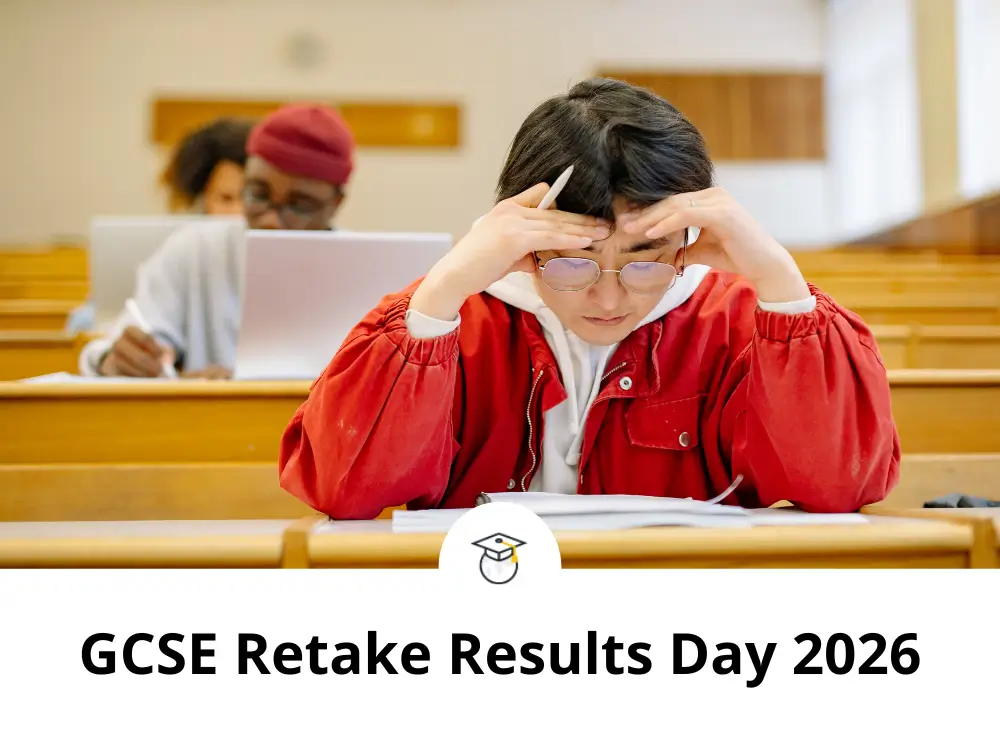
GCSE Retake Results Day 2026

GCSE retakes are a normal part of education, and for thousands of young people each year, GCSE retake results day is the moment all of that extra effort is put to the test. Whether you are picking up results in August or waiting on a January release date, knowing what to expect and what to do with your results when they arrive makes the whole experience a lot more manageable. This guide answers the questions young people most commonly have about GCSE retakes and results day 2026, all in one place.
When is GCSE retake results day 2026?
GCSE retake results day 2026 for the summer exam series falls on Thursday 20th August 2026. This covers all GCSE subjects sat during the summer window, which runs from 4th May to 26th June 2026, and is the same date that all other GCSE students across the country receive their results.
If you sat GCSE Maths or GCSE English Language in the November 2026 sitting, your results will follow in mid-January 2027. The November window runs from 29th October to 10th November 2026 and is a resit-only sitting; it is not open to first-time candidates.
Who can take GCSE retakes?
Anyone can retake a GCSE. There is no age limit and no restriction on how many times you can resit. If you are still at school or college, your institution will usually manage your resit entry for you, particularly for maths and English. If you have left school, you can sit your exams as a private candidate by registering through an approved exam centre. Many reputable online providers can handle the booking process on your behalf and place you at a local centre, making the process straightforward even without a school behind you.
Which subjects can I retake, and when?
GCSE Maths and GCSE English Language are the most flexible subjects when it comes to resit opportunities as they can be resat in both the November sitting and the summer sitting each year. All other GCSE subjects are only available to resit during the summer series.
This means that if you need to improve a grade in science, history, geography, or any subject other than maths and English, you will need to wait for the summer sitting. If maths or English is your priority, the November window gives you an earlier opportunity each academic year.
How will I receive my results?
How your results reach you depends on how you are entered for your exams. If you are sitting through a school or college, you will most likely collect your results in person on results morning in the usual way. Check with your institution in advance to confirm their arrangements and what time to arrive.
If you are a private candidate, your results will typically come through by email or via an online portal provided by your exam centre. Make sure you have confirmed the process with your centre before GCSE retake results day – a quick message or call in the days beforehand is all it takes to ensure you know exactly when and how your grade will come through.
Are GCSE retake results worth the same as original results?
Yes, completely. The exam paper sat by resit candidates is identical to the one sat by first-time candidates on the same day. Results are marked and regulated to exactly the same standard by Ofqual, and the qualification awarded is no different. Colleges, universities, employers, and apprenticeship providers do not make any distinction between a grade achieved through a resit and one achieved in an original sitting.
What is the pass grade for GCSE retakes?
The grading system is the same for GCSE retakes as it is for original sittings. A grade 4 is the standard pass (equivalent to the old grade C) and is the minimum required by most colleges, sixth forms, universities, and employers for maths and English. A grade 5 is a strong pass and may be required by more selective courses or institutions. Before GCSE retake results day arrives, it is worth checking the specific grade requirement for whatever you are working towards, so you can assess your result clearly the moment it comes in.
What if my resit grade is lower than my original?
Your original grade is never replaced. Regardless of how your resit goes, your highest achieved grade always stands on your record. A lower resit result cannot take away a better previous grade, which means there is no real downside to attempting a resit. The only direction your record can move is upwards.
Will GCSE retakes affect my college or university application?
For the vast majority of applications, no. What matters to colleges, sixth forms, and universities is whether you meet the required grade, not whether you needed more than one attempt to get there. A grade achieved through a resit is a grade like any other. Many admissions staff are also familiar with the resit process and view it positively, as it reflects a willingness to work hard and push for the result you need. If you are concerned about a specific application, check the entry requirements directly or contact the institution. In most cases there is nothing to worry about.
What are my options if I did not get the grade I needed?
There are several routes available to you. The most direct is to resit again because there is no cap on attempts, and your highest grade will always be the one that counts. If your August results are not where they need to be and you need to improve your maths or English grade quickly, the November 2026 sitting opens on 29th October, giving you a relatively early second chance. For all other subjects, the next opportunity is the summer 2027 series.
If you have attempted a subject multiple times without making the progress you need, or if you need a Level 2 qualification faster than the next GCSE sitting allows, Functional Skills Level 2 is a widely recognised GCSE equivalent. It is accepted by most universities, colleges, employers, and apprenticeship providers as equivalent to a GCSE grade 4 pass, and can be completed online with results typically available within ten working days. Always confirm that your specific institution or employer accepts it before enrolling, but the majority do.
How do I make sure I am better prepared for my next attempt?
The most useful thing you can do after any set of GCSE retake results is treat them as information. A disappointing result tells you something specific about what needs to change, whether that is the topics you focused on, the way you revised, or how you managed your time in the exam itself.
Some of the most effective preparation strategies include practising past papers under timed conditions, focusing revision on weaker topics rather than going over familiar ground, and building a consistent revision schedule that starts early rather than ramping up in the final weeks. At QTS Literacy Tutor, we know that spacing your revision out over time is proven to improve retention far more than last-minute cramming.
Structured online resources can make a significant difference for students revising independently, particularly courses that include video tutorials, topic-specific practice questions, and mock exams with worked solutions. Being able to track your progress and see where your weak areas lie helps you use your time more effectively between now and your next sitting.
Frequently Asked Questions
When is GCSE retake results day 2026?
GCSE retake results day 2026 for summer candidates is Thursday 20th August 2026. For candidates who sat GCSE Maths or English Language in the November 2026 sitting, results will be released in mid-January 2027.
How many times can I retake my GCSEs?
There is no limit. You can resit a GCSE as many times as you need to, and your highest grade will always be the one that stands on your record.
What if I need a qualification faster than the next GCSE sitting?
Functional Skills Level 2 is accepted by most colleges, universities, employers, and apprenticeship providers as equivalent to a GCSE grade 4 pass. It can be completed online from home with results available in as little as ten working days, making it a practical option if time is a factor.

QTS Literacy Tutor Team
We help thousands of students each year with revision, courses and online exams.